


Free Fire MAX x JUJUTSU KAISEN
GARENA INTERNATIONAL I
Free Fire MAX x JUJUTSU KAISEN is the kind of action game I can open for a short match and still feel that I have made meaningful progress. It combines the fast battle-royale format of Free Fire MAX with a Jujutsu Kaisen-themed presentation, giving the familiar survival formula a stronger visual identity. I reviewed it as a mobile player who cares not only about shooting and movement, but also about whether the interface remains understandable when the screen is busy, the match is tense, or the phone is being used in less-than-perfect conditions.
The game is free to install, and it comes from GARENA INTERNATIONAL I. Its audience is broad: people who want quick competitive matches, fans of the anime collaboration, and players looking for a more visually ambitious alternative to simpler mobile shooters. The store summary calls it a MAX Battle Royale Experience, but my opinion is more specific: its strongest quality is the way it makes a familiar mobile battle royale feel dramatic without requiring a long session every time.
How the interface handles a busy battle royale match
Readable information when everything is happening at once
The first thing I noticed is that Free Fire MAX asks the player to read several kinds of information at the same time. I need to follow the character’s position, nearby threats, weapon status, movement controls, and the changing safe area. That is normal for the genre, but on a phone it can become tiring quickly. The game’s visual style adds energy, although the extra effects and themed presentation can also make the screen feel crowded during combat.
Related News

The Impact of Free Fire MAX x JUJUTSU KAISEN on Gaming Culture

Why Talking Tom: Hero Dash Run Is Your Next Gaming Obsession
I found the basic flow easy to understand after a little practice. The game communicates the central goals through the match itself: move, search, survive, and decide when to fight. That makes it approachable for someone who has not played many battle royale games. At the same time, the number of on-screen elements means that beginners may need several matches before they stop looking at the controls and start watching the environment.
For readability, I would recommend playing with the phone held at a comfortable distance rather than bringing it too close to the face. A larger display helps, but it does not automatically solve every problem. On a smaller screen, I had to be more deliberate about where I placed my thumbs so that important buttons did not feel hidden beneath my hands. I also found that learning the layout in a quiet practice session was more useful than trying to understand it while being chased.
Related News

Why WhatsApp Messenger Still Makes Everyday Communication Feel Easy

Jurassic World: The Game Is the Better Dino Tycoon for Strategic Players

Threads in Real Life: Who Should Join, Lurk, or Leave

How SHEIN Turned Shopping Into an Endless Content Feed

How to Make Fortnite Feel Smarter on Mobile

Should You Switch to Microsoft Outlook on Mobile?
Navigation is simple in principle, demanding in practice
Moving through the game is not difficult because the objectives are mysterious. The challenge comes from making quick choices while navigating a three-dimensional space. I may know where I want to go, yet still have to judge cover, distance, elevation, and the danger of attracting attention. This is where the game differs from a slower action title: navigation is both travel and strategy.
The themed content can make the experience more appealing to fans, but it does not remove the need to learn the ordinary battle-royale habits. I still need to understand when to leave an exposed area, when to avoid a fight, and when collecting equipment is worth the risk. New players should not assume that recognizing the collaboration’s characters or style will make the matches easier. The visual connection is inviting; the competitive decisions remain demanding.
One useful habit is to pause briefly after landing instead of immediately running toward the nearest sound. I use that moment to identify a safer route, check what I have available, and decide whether the first encounter is actually worth taking. This reduces visual and mental overload, especially for players who find rapid information changes difficult to process.
Gallery
Customization matters more than it first appears
In a touch-controlled shooter, control placement is not a cosmetic detail. It directly affects whether I can react comfortably. I prefer to arrange the controls so that movement and aiming do not require awkward thumb stretches, then spend a few low-pressure matches checking whether the layout still works when I am moving quickly. A setup that feels fine in the menu can become uncomfortable after repeated turns, jumps, or camera adjustments.
This is also where different abilities and playing styles become important. Some players rely on one-handed use for short periods, while others need a stable two-handed grip. Someone with limited finger movement may benefit from reducing unnecessary hand travel, even if that means accepting a slower reaction in another part of the layout. I would not treat one arrangement as universally best. The right choice depends on hand comfort, device size, and whether the player prioritizes movement, aiming, or quick access to actions.
The most practical accessibility improvement is often a calmer control routine, not a faster one. I get better results when I learn one reliable layout and keep it consistent instead of changing positions before every match. Familiarity reduces the amount of attention spent searching for buttons, leaving more attention for sound, positioning, and team communication.
Visual intensity, sound, and sensory load
The presentation is part of the appeal, especially for players who enjoy the Jujutsu Kaisen connection. However, a lively visual style can be tiring for people sensitive to flashes, dense effects, or constant motion. During a close fight, several visual events may compete for attention at once. I found that taking short breaks between matches helped more than trying to push through an increasingly noisy session.
Sound can be useful because it adds information about nearby action, but it can also become a source of pressure. Players who are sensitive to sudden or layered sounds may prefer a quieter environment or lower device volume. I would keep the volume at a level that makes important cues understandable without turning every encounter into an exhausting sensory event. Headphones may help some players separate game audio from surrounding noise, while others may find headphones too intense; this is a personal trade-off rather than a universal recommendation.
Players who depend more on visual information should spend time watching how the game communicates danger through movement and screen activity, not only through audio. Players who depend more on sound should avoid treating every noise as an instruction to attack. In my experience, the strongest decisions come from combining cues with position and timing. That approach is also less demanding when one sensory channel is unavailable or distracting.
Playing across different situations, devices, and energy levels
Short sessions and everyday use
One realistic use case is a commute or a short break when I have enough time for a match but do not want to commit to a long console-style session. Free Fire MAX fits that situation better than many heavier competitive games because the basic loop is easy to enter: I can start with a clear objective and stop after the match. Still, I would avoid beginning a serious game when I know I may be interrupted. A battle royale match does not become less important simply because the player has to answer a message or leave the room.
For an everyday routine, I prefer using the game in planned blocks. I might play one or two matches, review what went wrong, and then stop rather than continuing while tired. This is especially helpful for players who experience hand fatigue, eye strain, or difficulty maintaining attention for long periods. The game rewards concentration, so playing while distracted can turn an enjoyable session into a frustrating one.
Who benefits from the game’s design
I think the game works well for players who enjoy quick decisions, competitive pressure, and a clear match-based structure. It is also a natural choice for Jujutsu Kaisen fans who want themed content inside an action game rather than a separate slow-paced experience. The free entry point makes it easy to try without committing money at the beginning, although optional purchases range from a small amount to a much larger amount per item. I would set a personal spending limit before browsing any optional content.
The game can also suit players who like improving through repetition. Each match gives me a chance to refine a specific skill: landing more safely, managing equipment, choosing better cover, or resisting the urge to chase every opponent. That makes it more satisfying than a game where progress depends only on unlocking something new. The learning curve is real, but it is understandable once I focus on one decision at a time.
It is less suitable for someone seeking a quiet, low-pressure game, a fully predictable pace, or a control scheme that requires very little dexterity. It may also frustrate players who dislike competitive encounters where another player’s decisions can end a promising session quickly. If I want a relaxing experience after a tiring day, I would choose a slower game instead.
How it compares with simpler mobile action games
Compared with a basic arcade shooter, Free Fire MAX offers more tension because survival, movement, and positioning matter together. I cannot rely only on aiming. Compared with a slower tactical game, it is easier to enter but often less forgiving once the match becomes active. Its middle ground is appealing: it has enough depth to reward planning without turning every session into a lengthy study of complicated systems.
That balance comes with a cost. The screen is busier than in a minimalist action game, and the touch controls demand more adjustment. A player who values immediate simplicity may prefer a game with fewer buttons and less environmental information. A player who wants a deeper competitive ecosystem may prefer a title built around longer matches or more specialized team roles. I see Free Fire MAX as the better choice for someone who wants accessible mobile battle royale action with a strong visual theme, not as a universal replacement for every shooter.
Performance expectations and practical preparation
The game supports devices running Android 5.0 or later, and the current version is 2.120.1. Those details make it broadly reachable, but compatibility alone does not guarantee that every phone will deliver the same comfort. A device that technically runs the game may still feel less pleasant if the display is small, the touch response is inconsistent, or the phone becomes uncomfortable to hold during longer sessions.
Before judging the game, I would test it in the conditions where I actually plan to play. Try a short session with the usual grip, check whether the controls remain reachable, and notice whether visual effects make it hard to follow opponents. If the phone is shared with other people, interruptions and changing grip positions can matter as much as the game’s own design. These simple checks tell me more than assuming that a supported operating system means an ideal experience.
Remaining barriers for inclusive play
The largest barrier is the combination of speed and precision. Touch controls ask me to move, aim, look around, and react under pressure, sometimes at the same moment. That can be difficult for players with limited dexterity, tremor, joint pain, or fatigue. Even when the interface is understandable, the physical demand may remain high. A player who can navigate menus comfortably may still struggle in a close-range fight.
Another barrier is the amount of attention required. The game expects me to process visual movement, sound, map information, inventory choices, and enemy behavior. Players with attention-related difficulties may find the constant stream of decisions exhausting. I recommend using a clear personal goal for each session, such as practicing movement or learning safer routes, instead of trying to improve every skill at once.
Social play can help, but it can also add pressure. Team communication may make matches more enjoyable for players who like cooperation, while players who find voice communication uncomfortable may prefer to keep their participation more limited. I would choose teammates who respect pauses and different reaction speeds. A supportive group can make the game feel more inclusive; an impatient group can make the same mechanics feel much less welcoming.
There is also a financial consideration. The game is free, but optional purchases can become expensive when treated casually. I would not spend simply because a themed item feels limited or visually attractive. Decide what the game is worth to you before purchasing, and remember that enjoying the core matches does not require turning every session into a shopping decision.
What I would change in my own setup
If I were helping a friend begin, I would first make the display comfortable, choose a stable grip, and keep the control arrangement simple. I would then play several low-expectation matches focused on orientation rather than winning. The goal would be to learn where movement, aiming, equipment, and map information appear, so that the interface becomes familiar before competitive pressure takes over.
My second recommendation would be to separate practice from performance. In a practice-oriented session, I can test a route or work on camera movement without judging the result too harshly. In a serious session, I would use the layout I already know and avoid changing several things at once. This makes it easier to identify whether a problem comes from the controls, the decision itself, or simple fatigue.
Finally, I would treat comfort as part of strategy. If my hands hurt or my attention is fading, continuing is unlikely to produce useful improvement. A short break can protect the quality of the next match. For players with different physical or sensory needs, that principle is even more important: the best configuration is the one that allows consistent, comfortable participation, not the one that looks fastest in a tutorial.
My inclusive verdict
Free Fire MAX x JUJUTSU KAISEN is a strong mobile action game for people who want fast battle-royale matches, a recognizable anime-inspired atmosphere, and enough tactical choice to reward practice. Its average rating is 4.4 from around 30 million ratings, and it has passed over 500 million installs, which reflects a very large player base rather than a guarantee that every player will find the controls comfortable. It is free, rated for teens, and the collaboration gives the presentation extra personality.
My recommendation is positive, with clear conditions. I would suggest it to a friend who enjoys competitive mobile games and is willing to spend time arranging controls and learning the visual rhythm of a match. I would be more cautious with someone who needs slow pacing, minimal sensory stimulation, or very low physical demand. The game does not remove those barriers simply because its menus are understandable.
After using it, I see its best inclusive quality in flexibility of approach: I can play briefly, practice one skill, choose a quieter routine, or focus on teamwork rather than chasing every encounter. Its main weakness is that the core action still depends on rapid touch input and sustained attention. If that trade-off suits you, the game offers a lively and repeatable experience. If it does not, a calmer action game may be the kinder choice for everyday play.
My final advice is to try it with comfort as the first test and victory as the second. If the screen remains readable, the controls feel natural, and the pace energizes rather than overwhelms you, this is an easy game to keep returning to. If those basics fail, the collaboration’s style will not compensate for the strain. That honest distinction is what makes the game worth recommending to the right player, rather than to everyone.
FAQs for Free Fire MAX x JUJUTSU KAISEN
What is Free Fire MAX x JUJUTSU KAISEN?
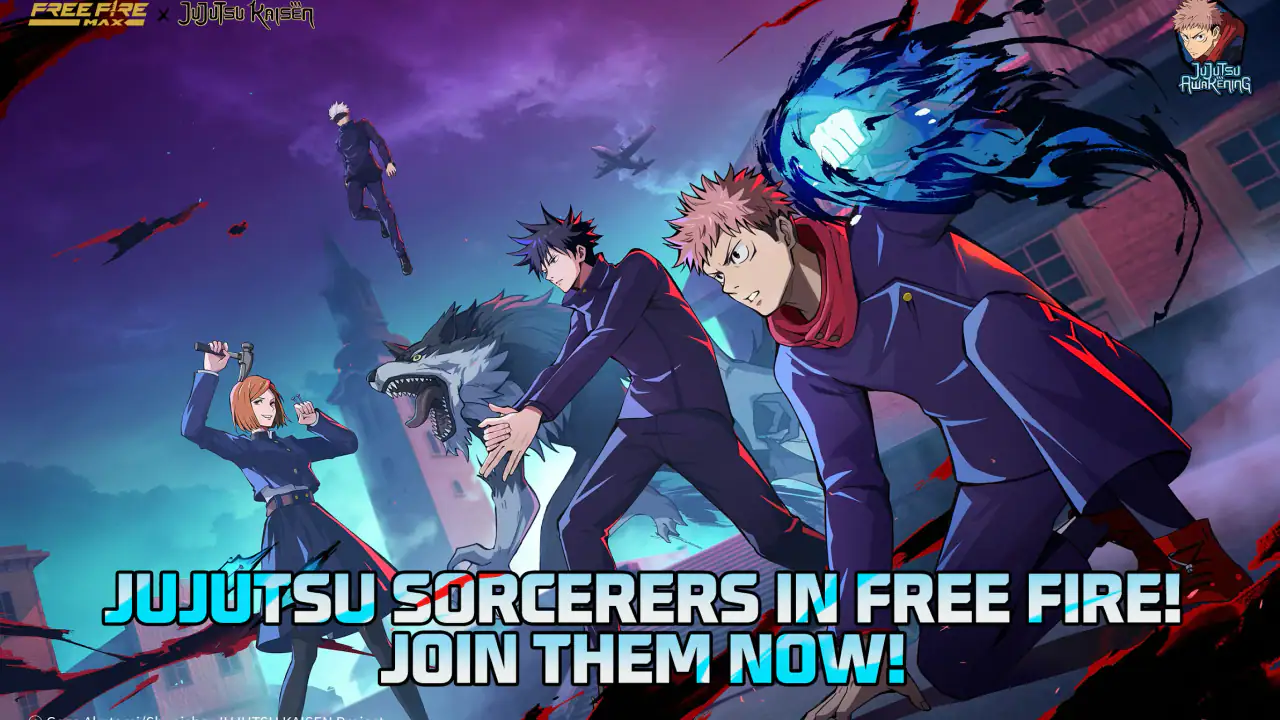
Free Fire MAX x JUJUTSU KAISEN is a special collaboration event within the Free Fire MAX game, bringing characters, costumes, and themed events from the popular anime, JUJUTSU KAISEN. Players can enjoy exclusive in-game content, participate in themed challenges, and unlock unique rewards inspired by the anime series.
Do I need to pay for any of the JUJUTSU KAISEN content in Free Fire MAX?
While Free Fire MAX is free to play, some JUJUTSU KAISEN-themed content may require in-game purchases. Players can unlock additional skins, characters, and items using diamonds, which is the game's premium currency. However, there are also free rewards available through special events and missions.
Will the collaboration affect the gameplay of Free Fire MAX?
The collaboration brings thematic changes and exclusive events but does not alter the core mechanics of Free Fire MAX. Players can expect the same battle royale experience with added excitement from JUJUTSU KAISEN-themed events, which offer new ways to enjoy the game without changing its fundamental gameplay.
Is the JUJUTSU KAISEN event available for a limited time in Free Fire MAX?
Yes, the JUJUTSU KAISEN collaboration is a limited-time event. Players should check the event schedule within the game to make the most of the exclusive content and rewards. Once the event concludes, the special items and events related to JUJUTSU KAISEN may no longer be available.
Can I play the JUJUTSU KAISEN event on both Android and iOS devices?
Absolutely! The Free Fire MAX x JUJUTSU KAISEN event is available on both Android and iOS platforms. Ensure your game is updated to the latest version to access all the event content. Whether you're playing on a smartphone or tablet, you can enjoy the full experience of this exciting collaboration.
Pros
- Stunning graphics enhance the battle experience.
- Smooth gameplay with minimal lag issues.
- Unique collaboration with JUJUTSU KAISEN adds excitement.
- Wide variety of customizable characters.
- Frequent updates keep content fresh.
Cons
- Requires high-end devices for optimal performance.
- In-game purchases can be costly.
- Matchmaking can take a while.
- Battery consumption is quite high.
- Some users report occasional crashes.


